
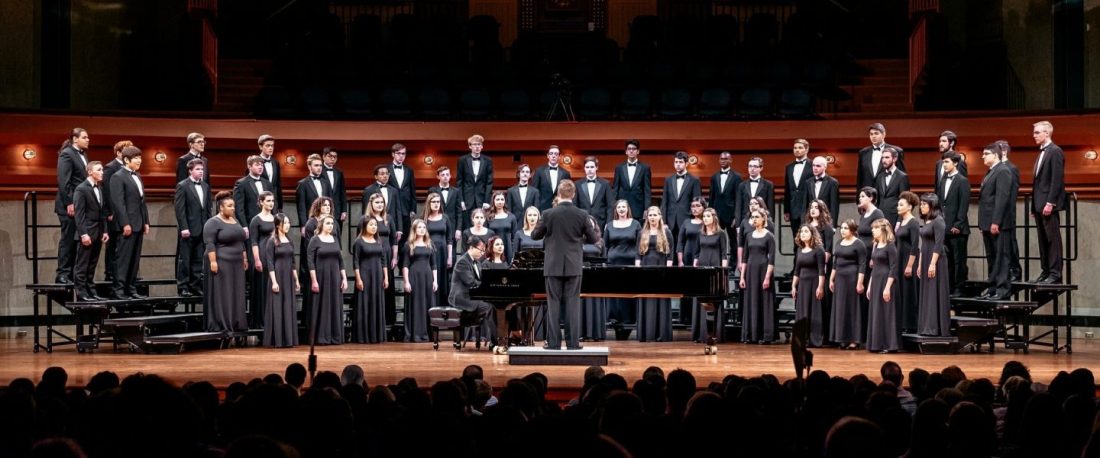
https://www.dropbox.com/s/iviwam4iu0fiopt/The%20Prayer%20of%20the%20Children.mp3?dl=0 This is a recording from 2013 of my Freshman/Sophomore girls’ choir Les Chanteuses singing one of my favorite pieces I ever performed with Mr. Bedford. “The Prayer of the Children” by Kurt Bestor is about the innocent young lives lost in the civil war and ethnic violence in the former country of Yugoslavia.
A classroom can be many things for a child. A classroom can be a place to learn or just a place that they have to go for seven hours a day, five days a week. Mr. Bedford’s classroom was a safe place, a home.
I started singing in my first choir at age 10 in my elementary school’s 4th and 5th grade choir: St. John’s Singers. I had already started to develop an interest in music through piano classes from 1st to 4th grade, but after discovering St. John’s Singers and singing in my first Honor Choir in Washington D.C., there was no question that I would continue to sing with the Middle School girls’ choir Cantatores followed by the Freshman/Sophomore girls’ choir Les Chanteuses.
St. John’s School, the private school I attended for my entire K-12 education, did not lack fine arts classes and ensembles for its students, but for the enormous size of the choir program there were definitely fewer choral directors than there should have been. Fortunately for me and my peers, this lack of choral directors meant Mr. Bedford was our choir director for 5 years in Cantatores and Les Chanteuses. In my opinion, these years from 6th grade to 10th grade are some of the most formative and influential years for a child’s musical abilities, especially for young girls. I don’t remember many specifics about Mr. Bedford’s teaching: how he would begin leading the choir when learning a new song or how he would teach a specific musical concept. However what I do remember about his teaching and classroom have become the core values in my personal teaching philosophy.
Being in Mr. Bedford’s choir meant being part of a family. He made sure that being a member of the choir meant knowing every other girl in that choir. We took time in our 45 minute rehearsal to play games to get to know each other. Most of the bonding took place at “lock-ins”: in-school retreats that combined fun activities and rehearsals to jumpstart our Spring semester. While I stuck with a few of my elementary school friends as I went into middle school, the majority of the girls I still consider friends today as a 21 year old are girls I met in Mr. Bedford’s choir. Mr. Bedford also creating incredible teacher-student relationships with his students that made every girl that entered his choir feel safe to be themselves and trust him.
I think creating a caring, welcoming environment for your students is crucial, especially in a musical ensemble. You never know what kind of home life and outside pressures your students will carry with them into your classroom and sometimes your teacher-student relationship with them is invaluable. Music can be an incredible way for children, especially in middle school, for kids to find themselves, connect with others, and cope with difficult emotions and experiences. Music teachers often have the same students in their classes and ensembles for 2-3 years, if not longer, and with this comes the potential for an incredible community and relationships to develop through musical experiences. I want my future choir to be a loving, inclusive environment that embraces everyone that walks in the door and helps them find their place, people, and purpose through music.
Mr. Bedford understood that a successful musical performance is more than singing correct notes and rhythms. Vocalists, unlike instrumentalists, have the privilege of having words linked to their music and Mr. Bedford made sure his students realized the power of that. If the emotions and message behind the music is never understood, the music is not complete. I believe everyone involved in the musical performance, the choir, director, and audience, should connect with the music’s purpose. If there is no connection or communication during a performance, there can be no emotional or social impact made on anyone involved.
Mr. Bedford most closely aligns with Progressivism educational philosophy. This progressive philosophy allowed his students to connect with each other and the music in a very powerful way. He valued the social aspect of choir as much as teaching musical concepts and made sure to have full class discussions about the music and its meaning. As I think about what I have taken from my experiences in Mr. Bedford’s choir, I can identify many Progressive ideas in my own personal teaching philosophy.
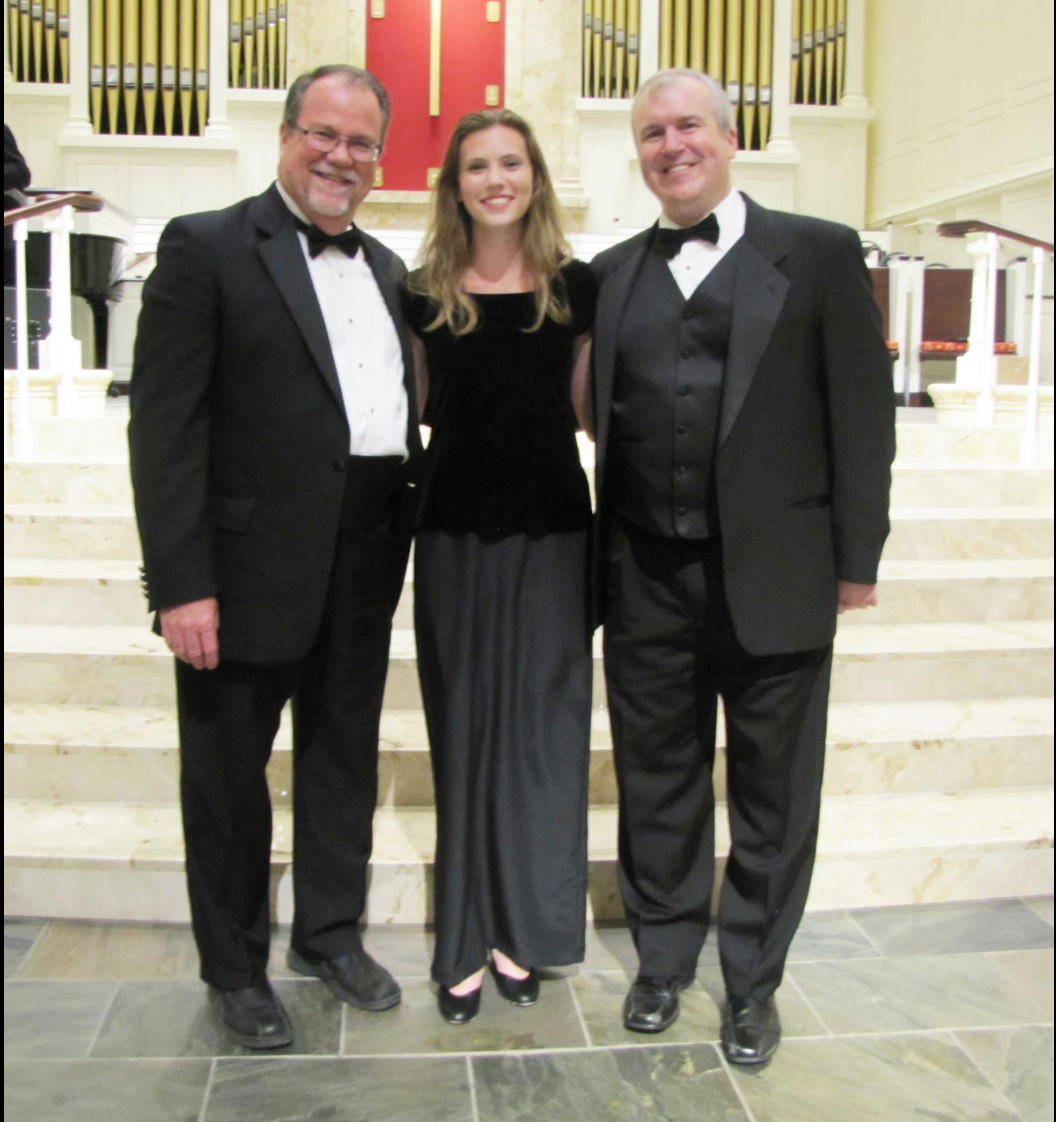
My senior year of high school was Mr. Bedford’s last year as a choir director. He retired in 2016 after teaching music at every level at both public and private schools for 35 years. 12 of those years were spent at St. John’s School and for 5 of those years he was my choir director. During my 9th and final year of choir at St. John’s, I told Mr. Bedford how much being in his choir meant to me and shaped me as a person and musician. When I think of my future as a teacher, dream of the day when I can have my own middle school girls choir and give them the loving community and incredible musical experiences they deserve.

 Olivia's Music Ed Blog